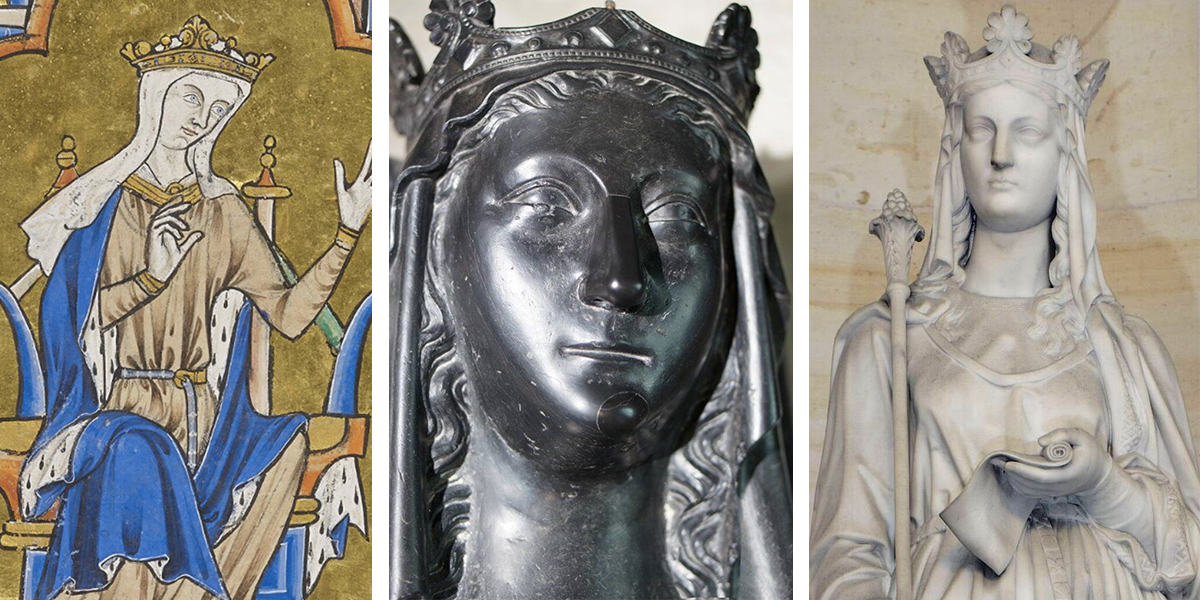
Possible likenesses of Blanche. Left: Dedication page, Toledo Bible Moralisée; 13th-century black marble tomb sculpture (gisant); 19th century sculpture by Antoine Etex
Blanche of Castile (1188–1252) was born to King Alfonso VIII of Castile and Queen Eleanor of England, daughter of Eleanor of Aquitaine, placing Blanche within an established tradition of female dynastic authority. Married at twelve to the future Louis VIII, heir to the French throne, she became a central figure in Capetian politics.
Following Louis VIII's death in 1226, she governed as regent for her minor son, Louis IX, defeating rival magnates in a successful military campaign that culminated in the Treaty of Paris and securing the throne against noble and foreign threats. Her rule drew hostile commentary from contemporaries: Matthew Paris called her domineering, and satirists alleged affairs with the papal legate and with Thibaut de Champagne. These attacks were consistent with broader resistance to a woman exercising royal power.Blanche was equally consequential as a patron. Household accounts, foundation charters, heraldic devices, and the testimony of contemporaries attest to a programme of commissions spanning the Bibles moralisées (including the celebrated Toledo dedication page, in which she appears enthroned beside the young Louis IX in a composition echoing the Coronation of the Virgin), her devotional psalter, the Cistercian abbey of Maubuisson, and memorial tombs for her son Philip Dagobert and grandchildren at Royaumont and Saint-Denis.
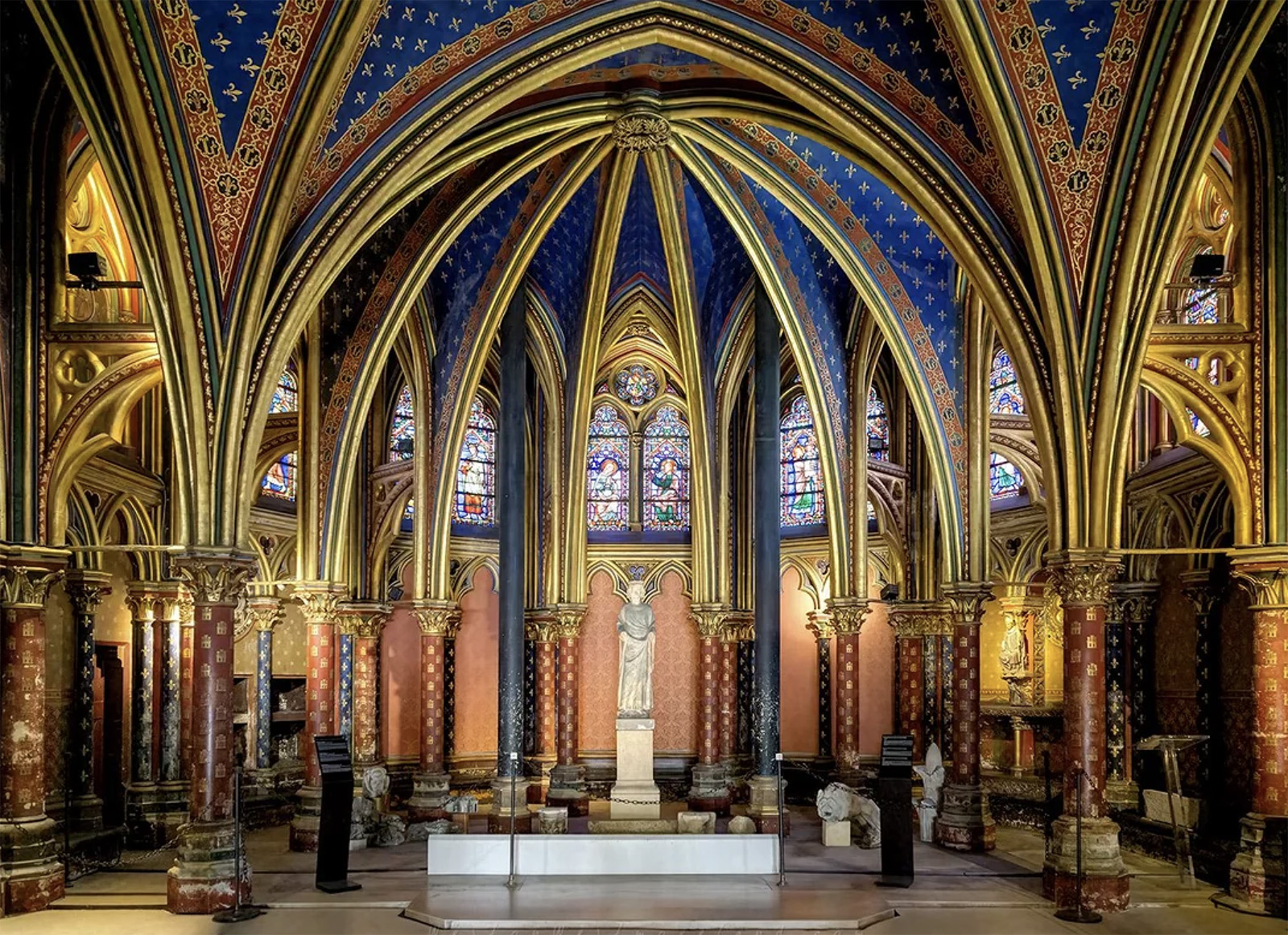
Blanche was instrumental in conceiving the Sainte-Chapelle and acquiring the Passion Relics, purchased at a price exceeding the cost of the building itself. Her heraldic castles of Castile remain visible throughout its fabric. A hymn to the Virgin is attributed to her. Dying in 1252, she had herself dressed in the white habit of a Cistercian nun of Maubuisson; after Louis IX's canonisation, his brother Charles called her the sancta radix, the sacred root of the family. Her regency and patronage together consolidated Capetian sacral kingship and shaped the visual culture of thirteenth-century Paris.
.